


The Real Legacy of the LA28 Olympic & Paralympic Games
As Los Angeles prepares to host the LA28 Olympic & Paralympic Games, one question deserves more attention than it receives.
What happens to the materials after the closing ceremony?
The Games will produce uniforms, banners, signage, merchandise, and event materials at an extraordinary scale. Most are designed for a single summer. Their purpose ends when the final medal is awarded.
We believe that is where their next story should begin.
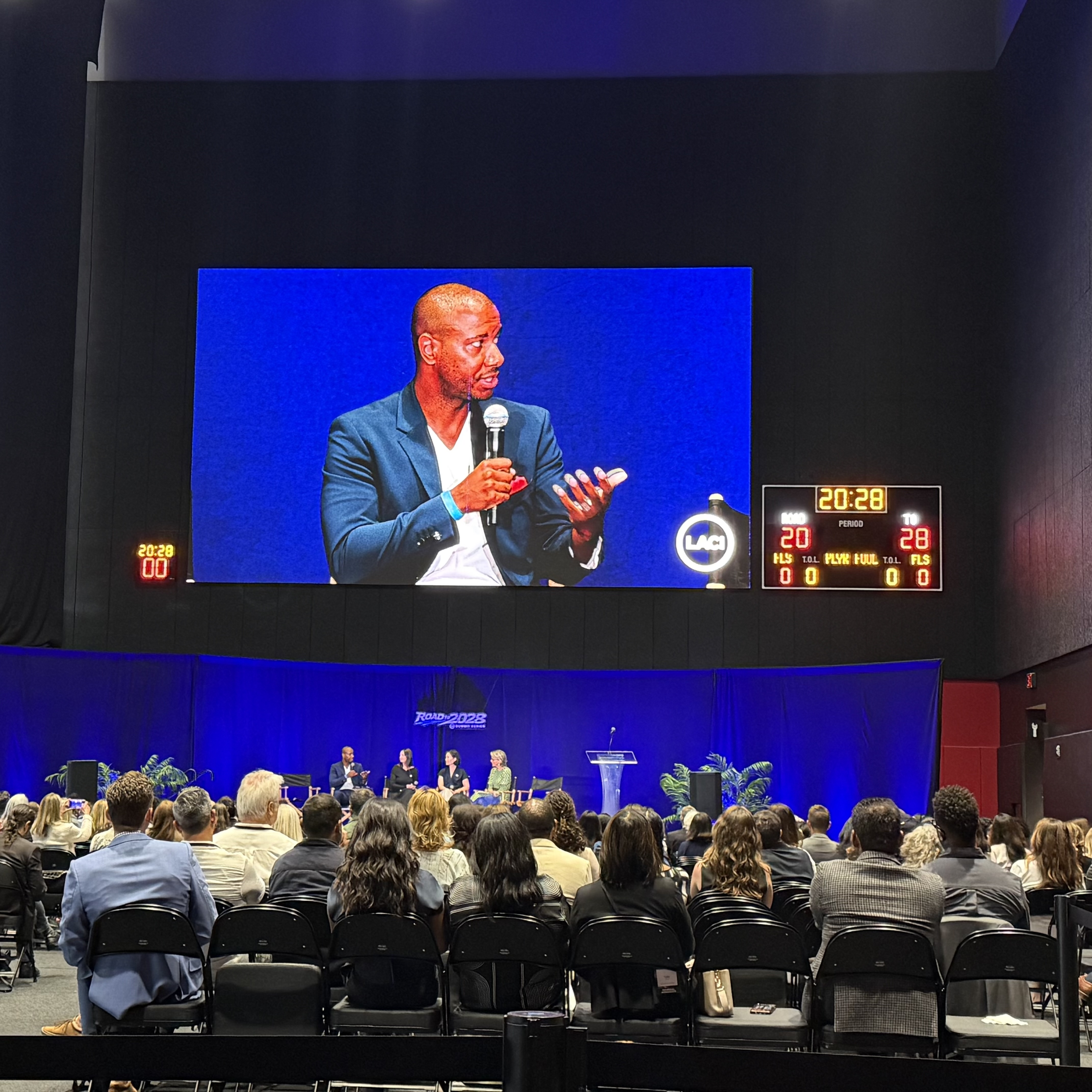
At this year's Los Angeles Cleantech Incubator (LACI) Road to 2028 Summit, Hamilton Perkins Collection joined the Sustainability, Style & Statements panel alongside Julia Viner of The Footwear Collective and Linda Lane Corrado of Homeboy Threads to discuss the future of circular fashion and textile recovery.
Throughout the Summit, one question surfaced repeatedly.
Why is it still so difficult for brands to recycle their own materials?
The answer has less to do with recycling than with how products are designed and managed.
Most supply chains move in one direction. Once a garment, banner, or uniform leaves the building, it often stops being anyone's responsibility. Recycling is not simply a materials challenge. It is a design challenge. It is an infrastructure challenge. It is an ownership challenge.
The LA28 Olympic & Paralympic Games present a rare opportunity to rethink that system.
Rather than viewing event materials as temporary assets, they can be designed as resources with multiple lives. A banner can become a bag. A uniform can become fiber ready for its next application. The products created from those materials carry the story of the Games long after the Olympic flame is extinguished.
That is what we mean by radical reuse.
The conversations at the Road to 2028 Summit reflected the scale of this opportunity. Speakers highlighted more than $11 billion already invested across Los Angeles County while LACI shared its goal of helping catalyze $1 billion in additional clean technology investment. The Summit brought together policymakers, investors, entrepreneurs, Team USA athletes, and industry leaders with a common goal of building a stronger and more sustainable legacy for Los Angeles.
At Hamilton Perkins Collection, this is the work we do every day.
Our company was built on the belief that materials deserve more than one life. We began by transforming retired billboards, banners, and textiles into premium products. Today, we are expanding that work by developing technologies that recover valuable materials from post consumer textiles so they can become feedstocks for the next generation of manufacturing.
Returning to Intuit Dome made this conversation especially meaningful. Earlier this year, Hamilton Perkins Collection won the NBA All Star Pitch Competition in the same building. Standing on that stage again to discuss the future of circular materials reinforced how quickly the conversation around textile circularity is evolving.
The greatest opportunity surrounding the LA28 Olympic & Paralympic Games is not only hosting the world's largest sporting event.
It is demonstrating that the world's largest sporting event can also become a model for circular materials.
The legacy of LA28 will not be defined only by the performances on the field of play.
It will also be defined by what we choose to do with everything that remains after the Games are over.
Because the closing ceremony should never be the end of a material's story.
It should be the beginning of its next life.


